Is Microcement Waterproof for Toronto Shower Walls?
Sealed microcement resists water, but it is not a waterproofing layer on its own. How a shower system is built so microcement works in Toronto bathrooms.
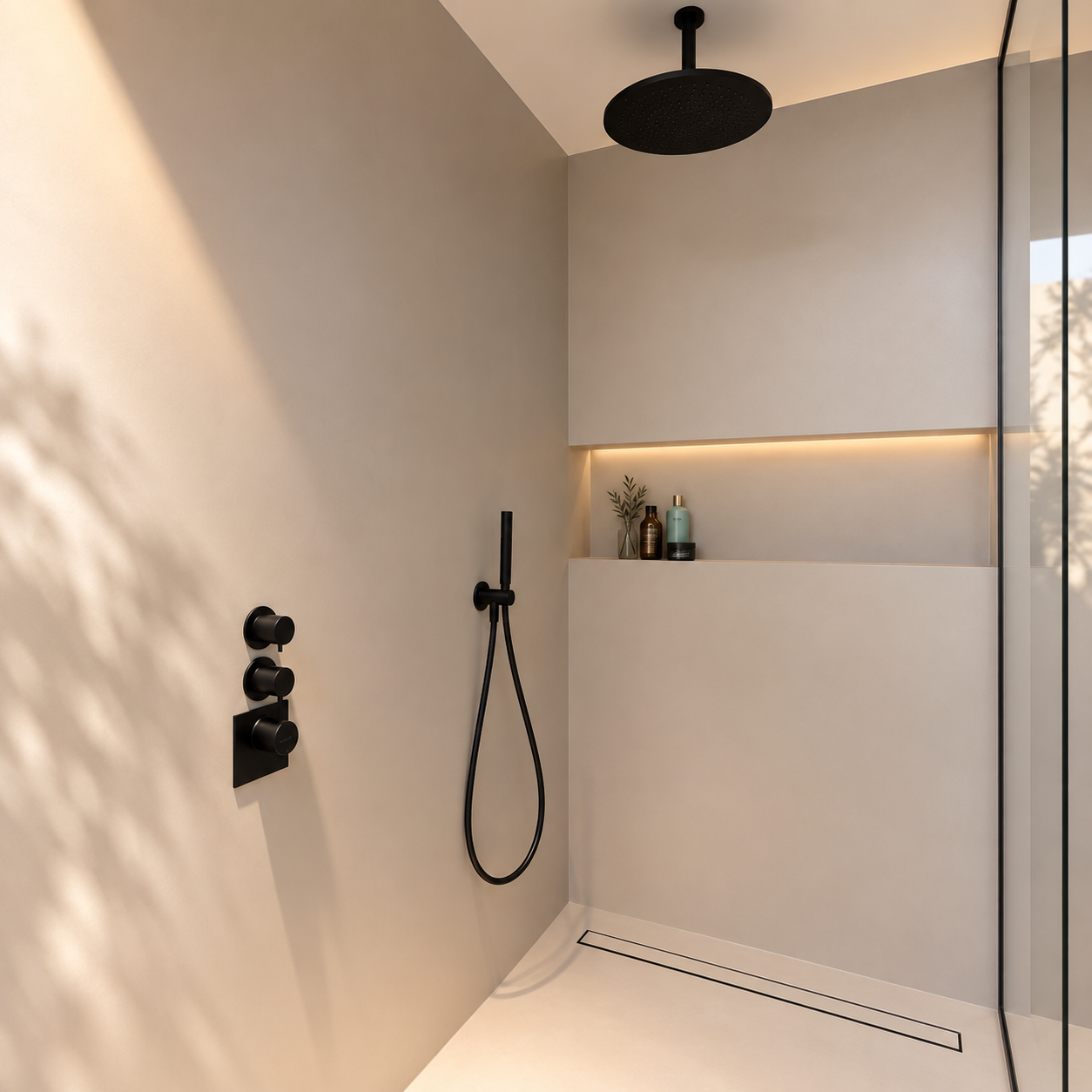
Sealed microcement is water-resistant, but it is not waterproof on its own. In a shower it must sit on a proper waterproofing membrane, with a sealer rated for wet areas on top. Built that way, microcement works well on shower walls and floors.
How a microcement shower is built
Sound backing board. Cement board or a similar board rated for wet areas. Regular drywall is not suitable.
Waterproofing membrane. A liquid or sheet membrane covering walls, floor and corners, with reinforcing tape at joints and around the drain and valves.
Microcement base coats. Usually reinforced with mesh.
Finish coats. Thin layers that give the colour and texture.
Sealer. Several coats of a polyurethane or similar sealer rated for showers.
The membrane keeps water out of the wall. The sealer protects the microcement from water, soap and staining.
What to check
The membrane is continuous and tested before finishing.
The shower floor slopes correctly to the drain.
Niches, benches and corners are sealed as carefully as flat walls.
The sealer is compatible with the microcement system.
Care in the shower
Squeegee or wipe walls after use to reduce soap and mineral build-up.
Use pH-neutral cleaners. Avoid bleach, vinegar and limescale removers.
Reseal the shower every few years, or sooner if water stops beading.
Next step
Read more about microcement for bathrooms, or request a free quote and send photos of the bathroom you want to redo.
Frequently asked questions
Is microcement waterproof?
Sealed microcement is water-resistant, but it is not waterproof by itself. In showers it needs a waterproofing membrane underneath.
Can microcement be used on a shower floor?
Yes, over a waterproofing membrane, with a correct slope to the drain and a slip-resistant sealer.
How often should a microcement shower be resealed?
Every few years in normal use, or sooner if water stops beading on the surface.
What cleaners are safe for a microcement shower?
pH-neutral cleaners. Bleach, vinegar and limescale removers damage the sealer.