Venetian Plaster vs. Limewash: Understanding Texture, Depth and Finish
A practical comparison of Venetian plaster and limewash across texture, depth, sheen, application, room suitability, lighting, care, and design intent.
The fundamental difference between Venetian plaster and limewash is how each finish is built and how it carries light. Venetian plaster creates a layered, trowelled surface with physical depth that may be matt, stone-like, softly burnished, or polished. Limewash is a thin, brushed mineral coating that creates clouded colour and a soft, deeply matt character. Neither is universally better; the right choice depends on the room, substrate, lighting, desired movement, and maintenance expectations.
What is the difference between Venetian plaster and limewash?
Venetian plaster and Marmorino finishes are applied in thin coats with a trowel. Formulations vary and may include lime, marble powder, mineral aggregate, or modern binders. The applicator builds and compresses layers, controlling tool marks, density, and sheen. The finished wall has a tangible surface, even when it feels smooth to the hand.
Limewash paint is applied with a brush in overlapping passes. Traditional limewash is based on lime, water, and mineral pigment, while contemporary interior products may be adapted for prepared modern walls. The coating remains visually translucent, allowing one pass to interact with the next. It usually has less physical build than plaster but more colour variation than conventional paint.
How their appearance differs
Depth, movement, and tool character
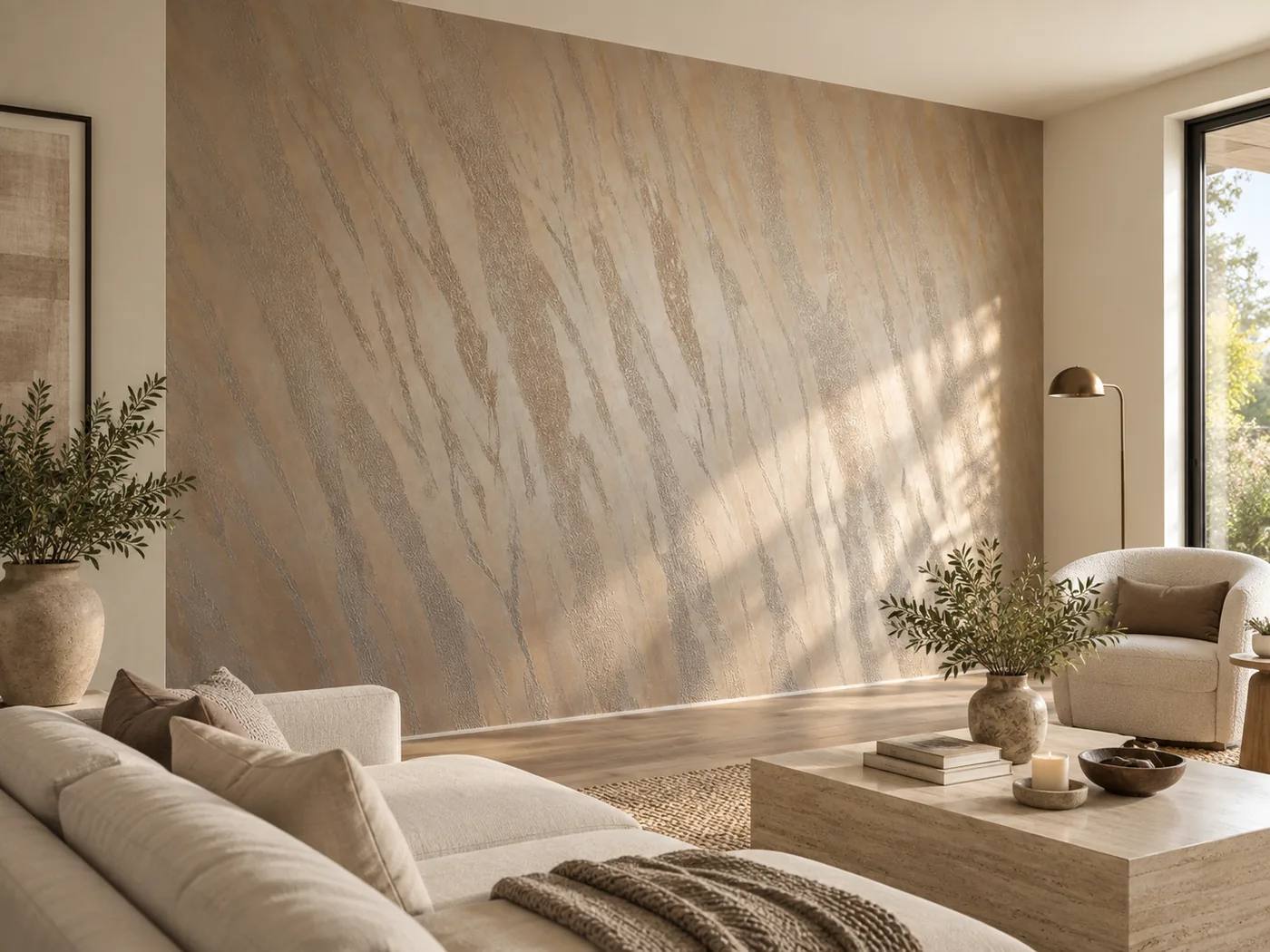
Venetian plaster develops movement through compression and trowel placement. Fine arcs, overlapping passes, and changes in density can make a wall appear deeper than its colour alone would suggest. Coarser Marmorino can evoke softly worked limestone, while finer plaster can approach a smooth, luminous surface. The pattern should feel composed at room scale; overly busy trowel marks can compete with the architecture.
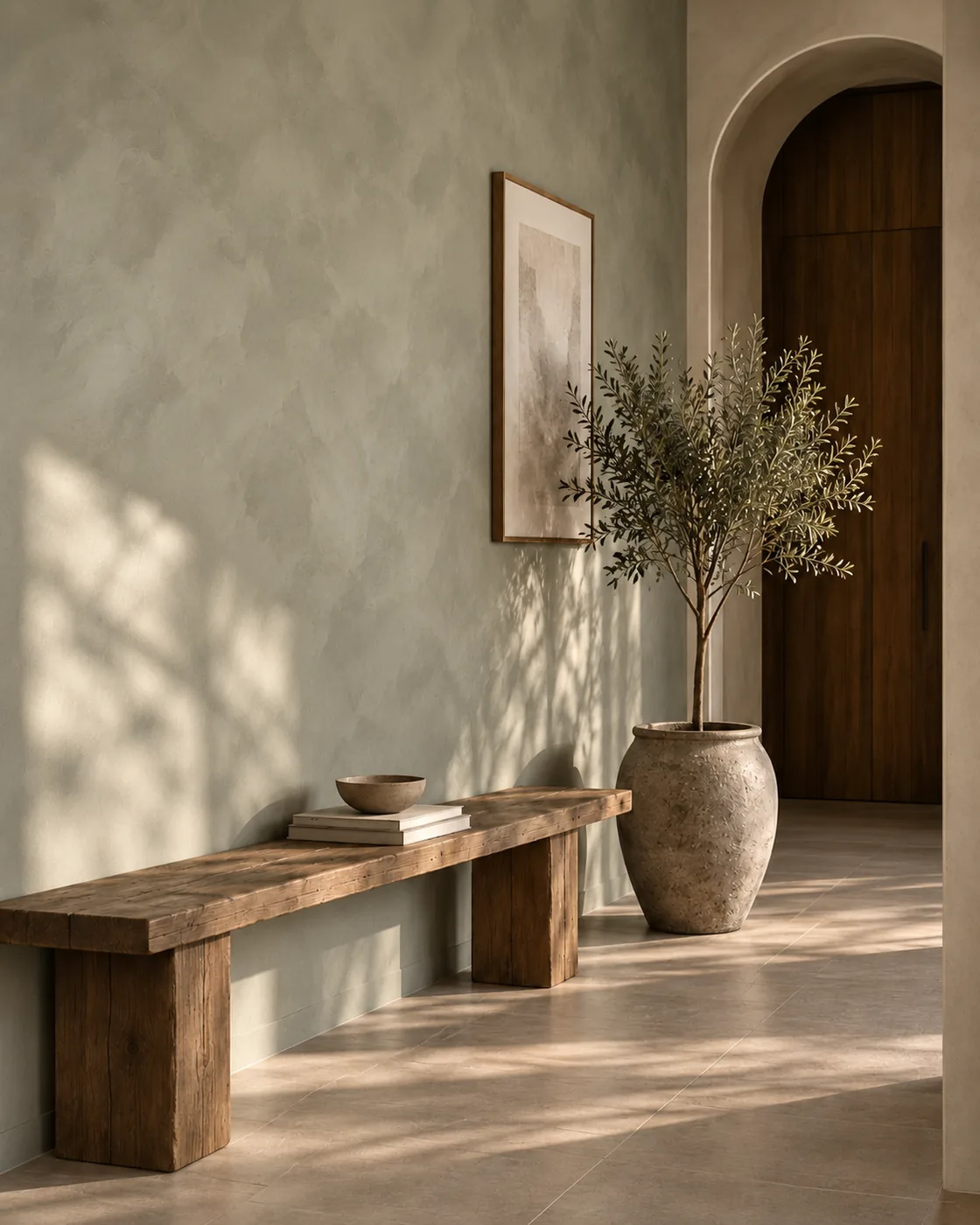
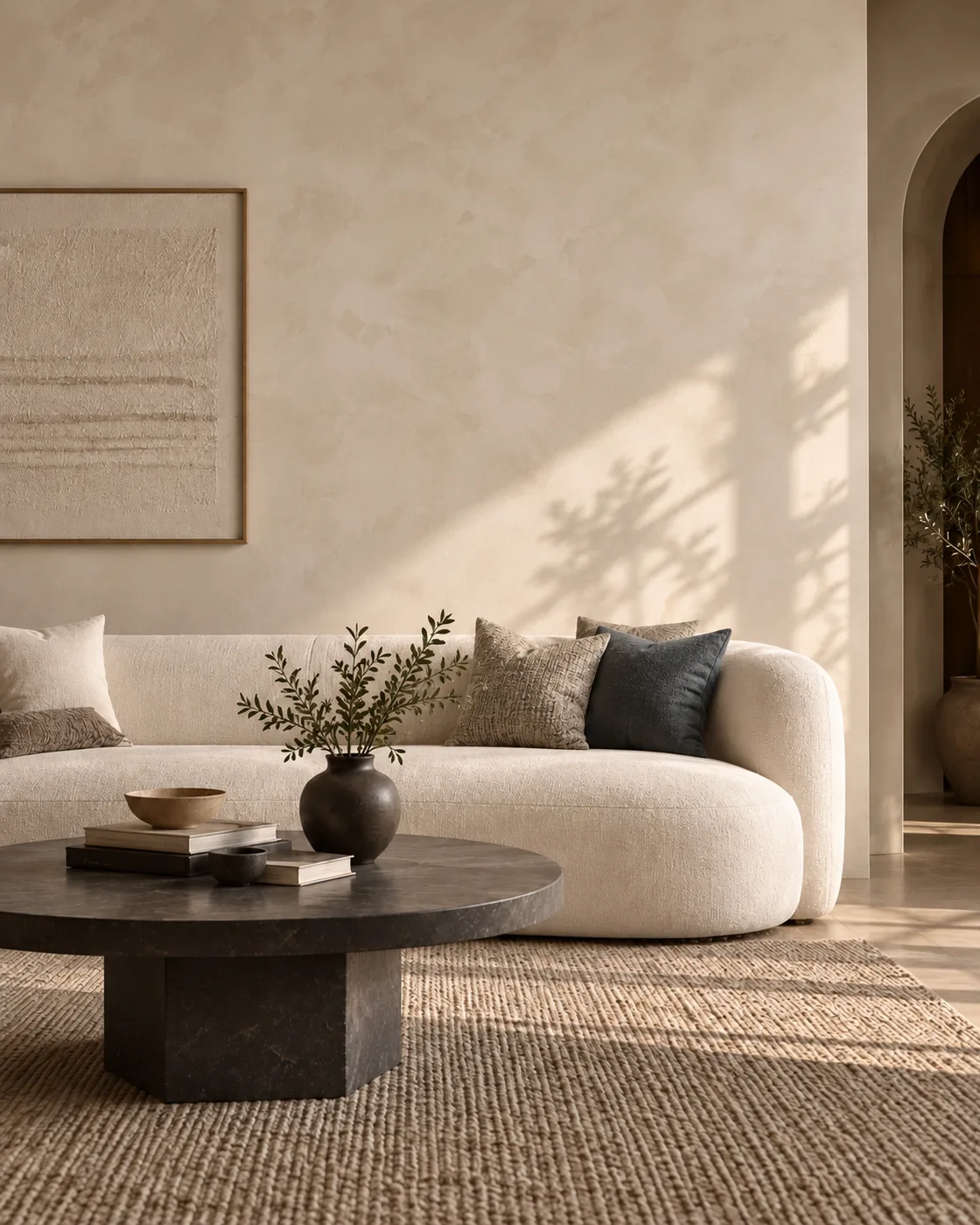
Limewash develops movement through brush direction and variation in opacity. Broad clouds and softer transitions are part of its character. Because the coating is matt, the variation usually reads as atmospheric colour rather than reflective pattern. The result can make new drywall feel less flat and more settled without giving it the physical presence of a built plaster finish.
Polished versus soft mineral character
A polished Venetian plaster can reflect highlights and sharpen details, but not every Venetian finish should be glossy. Many contemporary interiors use softly burnished or matt plaster for a quieter stone character. Limewash generally remains low sheen. It absorbs and scatters light, which can make a saturated colour feel softer and a pale neutral feel more layered. If a room needs precise reflection or a jewel-like focal wall, plaster may be appropriate; if it needs a calm mineral background, limewash may be the clearer direction.
Application technique and preparation
Venetian plaster demands a stable, properly prepared surface. Flatness is important because burnishing and grazing light can reveal ridges, patching, or poorly finished joints. The applicator controls coat thickness, drying, sanding or compression, and the final protective treatment. Corners, trims, fireplaces, and junctions should be resolved before the decorative work begins. The process is deliberate and difficult to compress into a conventional painting schedule.
Limewash also needs compatible preparation, but the objective is controlled absorption rather than a polished plane. Previously painted drywall commonly requires a mineral bonding primer. Uneven porosity, repairs, or mixed substrates can create uncontrolled flashing. During application, the painter maintains wet edges and a consistent brush language across the full wall. Small isolated touch-ups may remain visible because the finish is intentionally translucent.
Which rooms suit each finish?
Venetian plaster often suits entries, dining rooms, living spaces, powder rooms, stair halls, and feature walls where the surface should act as an architectural material. Approved systems can be considered for fireplace surrounds or other demanding areas after heat, moisture, and maintenance requirements are reviewed. Its crafted character can be effective beside timber, stone, metal, and restrained millwork.
Limewash is often effective in bedrooms, living rooms, studios, quiet corridors, and larger wall areas where subtle movement should support furniture and art. It can wrap a room with colour without making every wall a focal point. Kitchens, bathrooms, and high-contact areas require product-specific review; frequent scrubbing, splash exposure, or grease may favour a more washable coating or a protected system.
How natural and artificial light affect the finish
Light should be evaluated before colour is finalized. Grazing daylight emphasizes plaster relief and compressed trowel marks. A burnished wall may shift from quiet to reflective as the sun moves, while diffuse northern light can make the same surface appear calmer. Limewash responds through tonal variation: some passages feel lighter or denser as the viewing angle changes, but the overall sheen remains subdued.
Artificial wall washers, pendants, and warm evening lamps can change undertones significantly. Place a large sample vertically in the intended room and review it throughout the day. The finish catalogues can help establish a direction, but printed and screen colours cannot predict the interaction among pigment, technique, room light, and adjacent materials.
Colour variation and sampling
Both materials are valued for variation, so approval should define a range rather than one exact spot colour. For Venetian plaster, the sample should show the intended aggregate, trowel scale, contrast, and burnish. For limewash, it should show brush movement, coat count, and the relationship between lighter and denser areas. A small chip is rarely enough. A generous sample board, and sometimes an on-site mock-up, gives the client, designer, and applicator a shared visual reference.
Maintenance and durability considerations
Venetian plaster can be durable when the complete system suits the location, but care depends on its protection. Waxes, soaps, or modern sealers have different cleaning requirements. Abrasive pads and aggressive chemicals can alter sheen. Limewash generally has a softer physical character and may develop patina in active rooms. Dusting and gentle product-approved cleaning are safer than repeated scrubbing. Neither finish should be sold through a vague promise of being “maintenance free.”
Durability also includes repair expectations. A localized plaster repair may retain a visible transition because tone and compression change with each application. Limewash can often be refreshed across a complete wall more readily than a small area can be invisibly touched up. Understanding that distinction helps establish a realistic long-term plan.
Choosing according to design style
Venetian plaster is not limited to ornate or traditional rooms. A controlled matt Marmorino can suit minimal architecture, while a polished finish can bring formality to a smaller focal area. Limewash can support both historic and contemporary interiors because its effect comes from colour movement rather than applied ornament. The best choice follows the room’s proportions, material palette, and desired hierarchy—not a style label. Browse completed surface applications to study how each material relates to architecture at a larger scale.
How to choose between Venetian plaster and limewash
Choose Venetian plaster when physical depth, trowel craft, or a controlled level of burnish is central to the design. Choose limewash when broad atmospheric colour, a soft matt surface, and understated brush movement are the priority. Then test the decision against substrate condition, room use, lighting, schedule, and cleaning expectations. In some interiors, both can coexist: plaster on a focal volume and limewash on surrounding walls.
A project-specific recommendation begins with photographs, drawings, surface information, and a conversation about how the room will be used. Request a finish consultation to compare appropriate systems and plan representative samples before committing to a full installation.
Frequently asked questions
Is Venetian plaster more durable than limewash?
Durability depends on the exact system, substrate, protection, location, and maintenance. Venetian plaster generally has more physical build and may use a protective treatment, while limewash has a softer matt character. Neither should be specified without reviewing the room’s contact, moisture, and cleaning needs.
Can Venetian plaster and limewash be used in bathrooms?
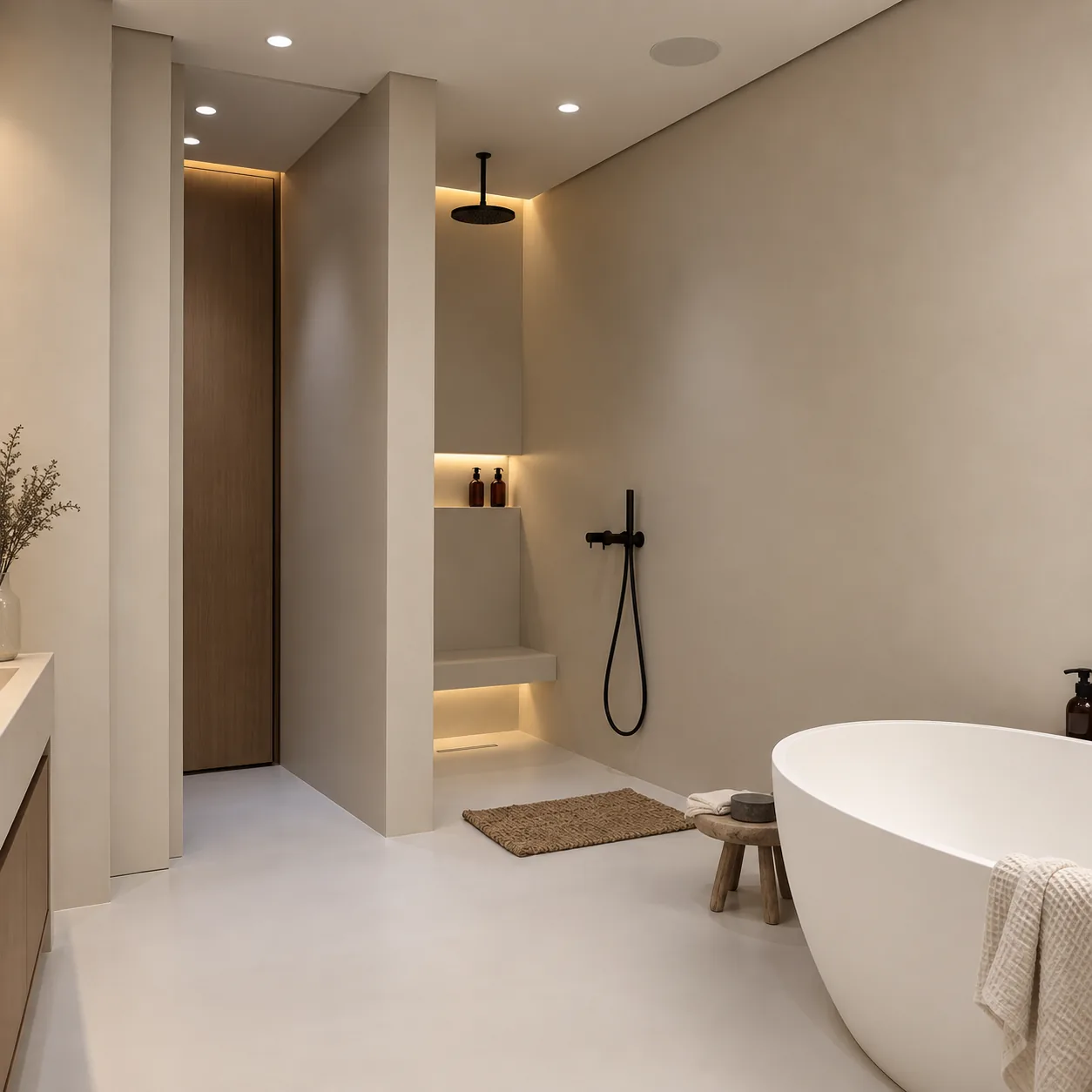
Some approved plaster or limewash systems may suit selected bathroom walls, but splash zones, showers, ventilation, substrates, and cleaning requirements need separate assessment. A decorative finish does not replace waterproofing.
Which finish is better for a feature wall?
Venetian plaster often suits a feature wall when trowelled depth or burnish should be prominent. Limewash suits a feature wall when the goal is soft colour movement and a deeply matt effect. The room’s light and adjacent materials should guide the choice.
Why is a large sample important for mineral finishes?
A large sample shows the scale of trowel or brush movement, the range of colour variation, and the way light changes the finish. Small colour chips cannot represent those qualities reliably.