How to Choose an Architectural Wall Finish for Your Space
A room-first framework for comparing microcement, Venetian plaster, limewash, interior paint, and exterior paint by use, light, substrate, texture, and care.
To choose an architectural wall finish, begin with how the room functions, then define the visual character, study the light, assess the substrate, and decide how much maintenance and natural variation are acceptable. Only after those questions are clear should you compare microcement, Venetian plaster, limewash, or architectural paint. The right finish is the one whose appearance, technical build-up, and care requirements fit the actual space; there is no single winner for every project.
Start with room function
A bedroom, family entry, restaurant washroom, exterior façade, and formal dining room place very different demands on a coating. Note moisture, direct splash, abrasion, furniture contact, children, pets, cleaning frequency, heat, and exposure to sunlight. Identify which surfaces are working surfaces and which are primarily visual. This prevents a delicate finish from being placed where it will be scrubbed daily, or a highly protective finish from being specified where a softer mineral character would be more appropriate.
The same room can use more than one finish. Durable paint may serve doors, trim, and active walls, while a crafted mineral surface defines a fireplace or niche. In open-plan spaces, a continuous finish may connect zones, while a change in material can mark circulation or a focal volume. Function establishes the boundaries within which aesthetic choices can be made responsibly.
Define the desired visual character
Describe the atmosphere before selecting a product. Should the walls feel quiet and uniform, softly clouded, stone-like, polished, or visibly hand-trowelled? Do you want the surface to recede behind art and furnishings, or act as a primary architectural material? Words such as “warm,” “calm,” or “textured” are useful only when paired with examples that show scale, sheen, and variation. A large sample helps translate subjective language into a finish that the client and applicator understand in the same way.
Evaluate texture and light together
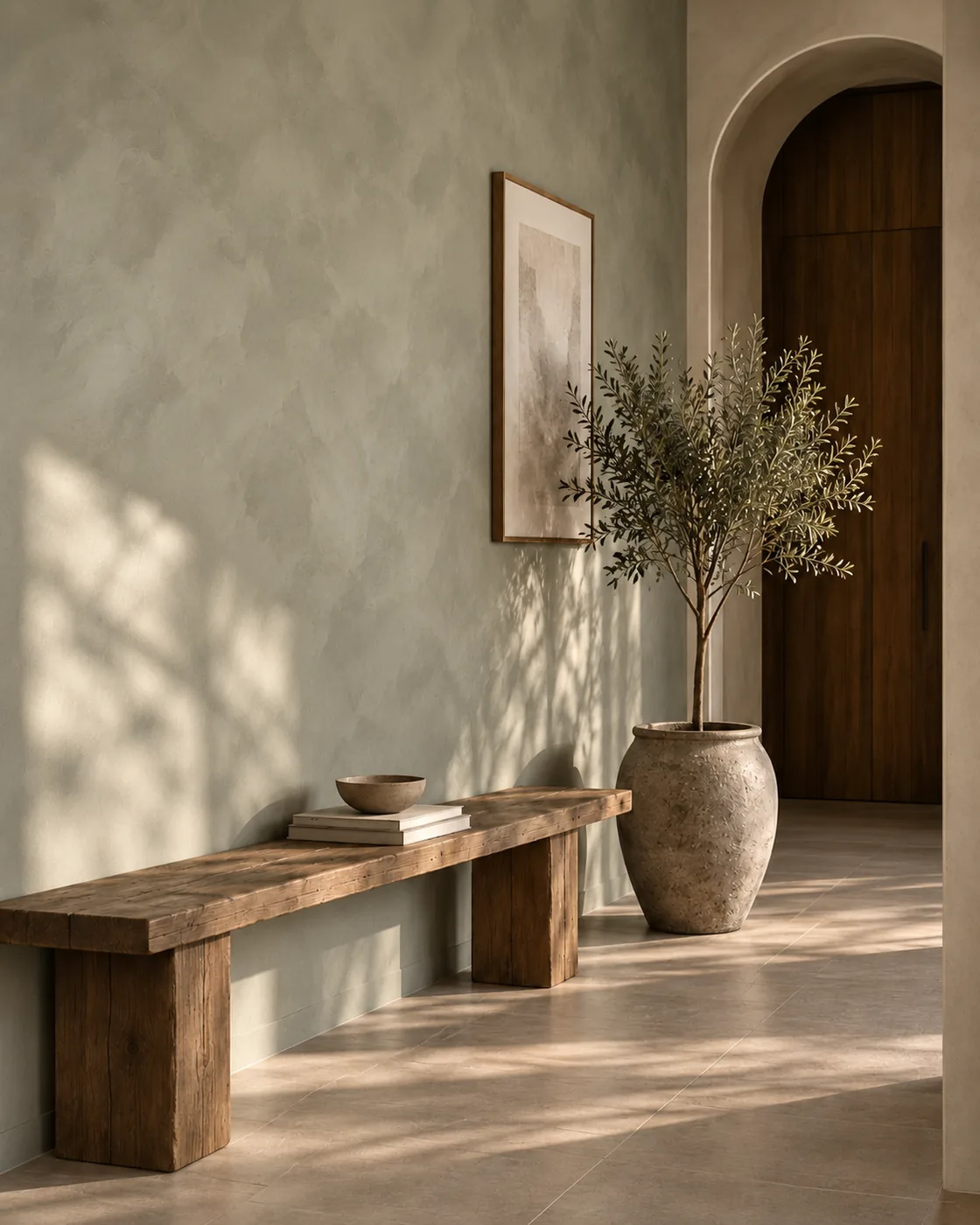
Texture is revealed by light. Grazing light from a side window or wall washer emphasizes every trowel ridge, brush transition, and substrate imperfection. Diffuse light softens movement. A polished finish can brighten a dark corner but may become visually active under strong directional lighting. A matt mineral surface absorbs light and can make colour feel deep, although dark matt walls may show handling in busy areas.
Review samples vertically where the finish will be installed. Observe morning, afternoon, and evening conditions, including artificial lighting. Place the sample beside flooring, cabinetry, stone, fabrics, and trim. Screen images and showroom lighting can establish a direction, but they cannot reproduce the room’s actual undertones and reflections.
Assess the substrate before choosing the finish
The substrate is part of the finish system. Check for cracks, movement, dampness, loose paint, uneven joints, mixed materials, repairs, and changes in porosity. Decorative coatings rarely solve underlying construction problems; in many cases they reveal them. Ask what preparation, reinforcement, primers, levelling, or waterproofing is required and who is responsible for each stage. A clear build-up is more useful than a quotation that names only the decorative top coat.
Compare the main architectural finish options
Microcement: continuity and mineral movement
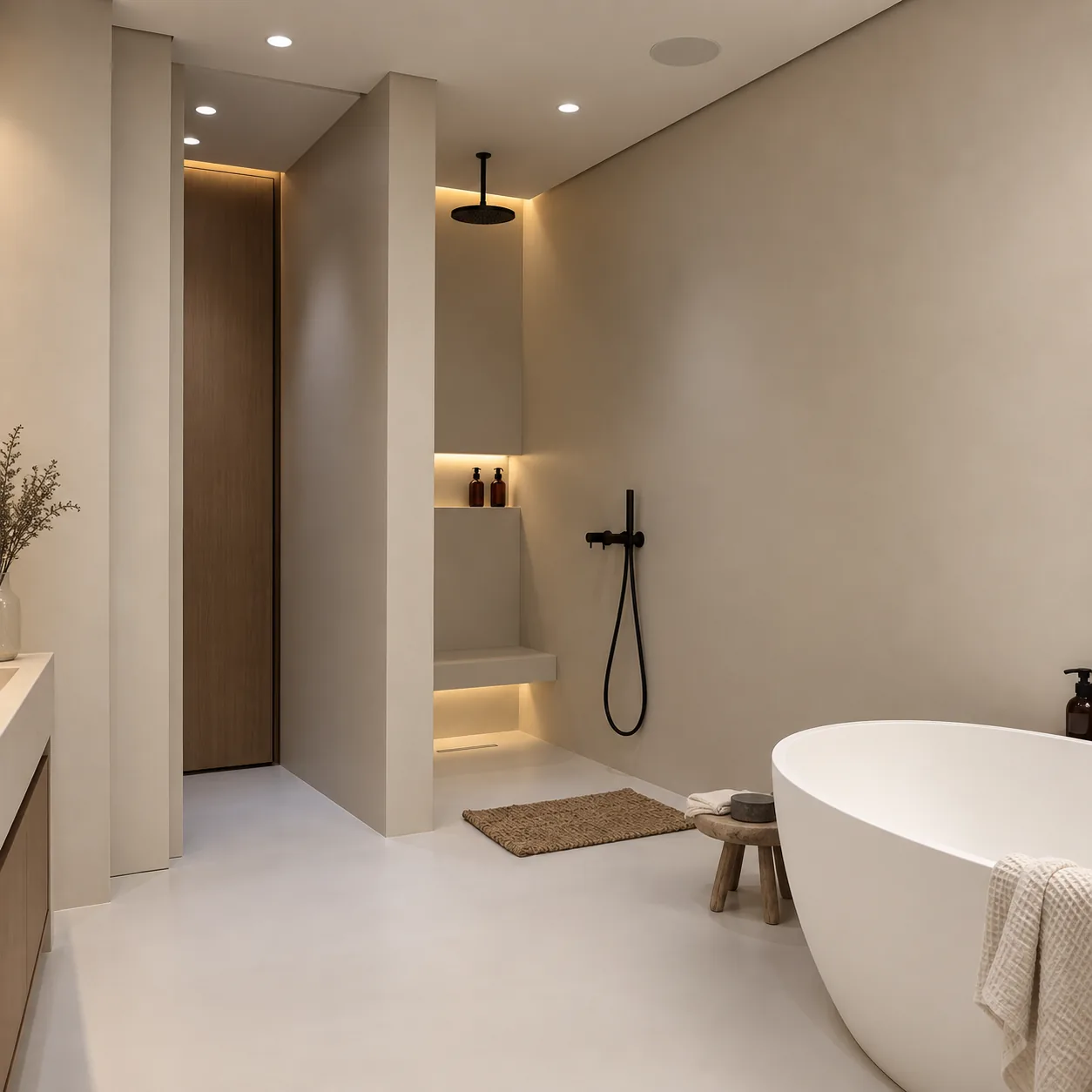
Microcement is a thin, layered coating that can create continuous-looking walls, floors, and selected built-in forms. It is useful when the architecture benefits from fewer visual joints and a restrained trowelled character. Bathrooms, stairs, kitchens, and floors require system-specific review for waterproofing, movement, slip, impact, and sealing. Choose it for continuity, not because it is assumed to be indestructible or suitable over every substrate.
Venetian plaster: depth, compression, and controlled sheen
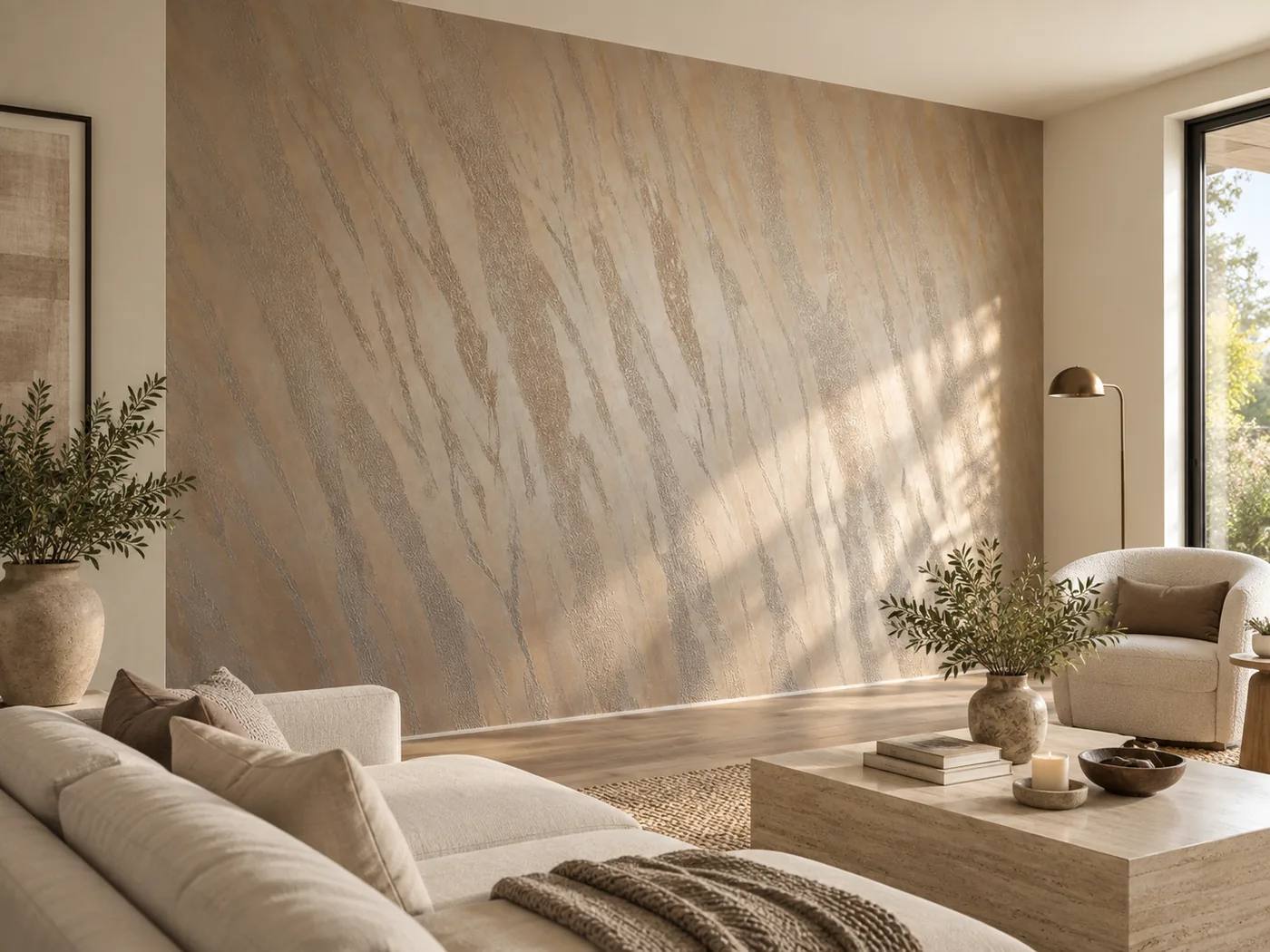
Venetian plaster and Marmorino describe families of hand-trowelled finishes that range from matt and limestone-like to smooth and polished. Multiple coats and compression create depth that changes with viewing angle and light. These finishes suit feature walls, entries, stair halls, living spaces, and architectural volumes where visible craftsmanship is part of the brief. Flatness, edge preparation, and a representative sample are essential.
Limewash paint: atmospheric colour and softness
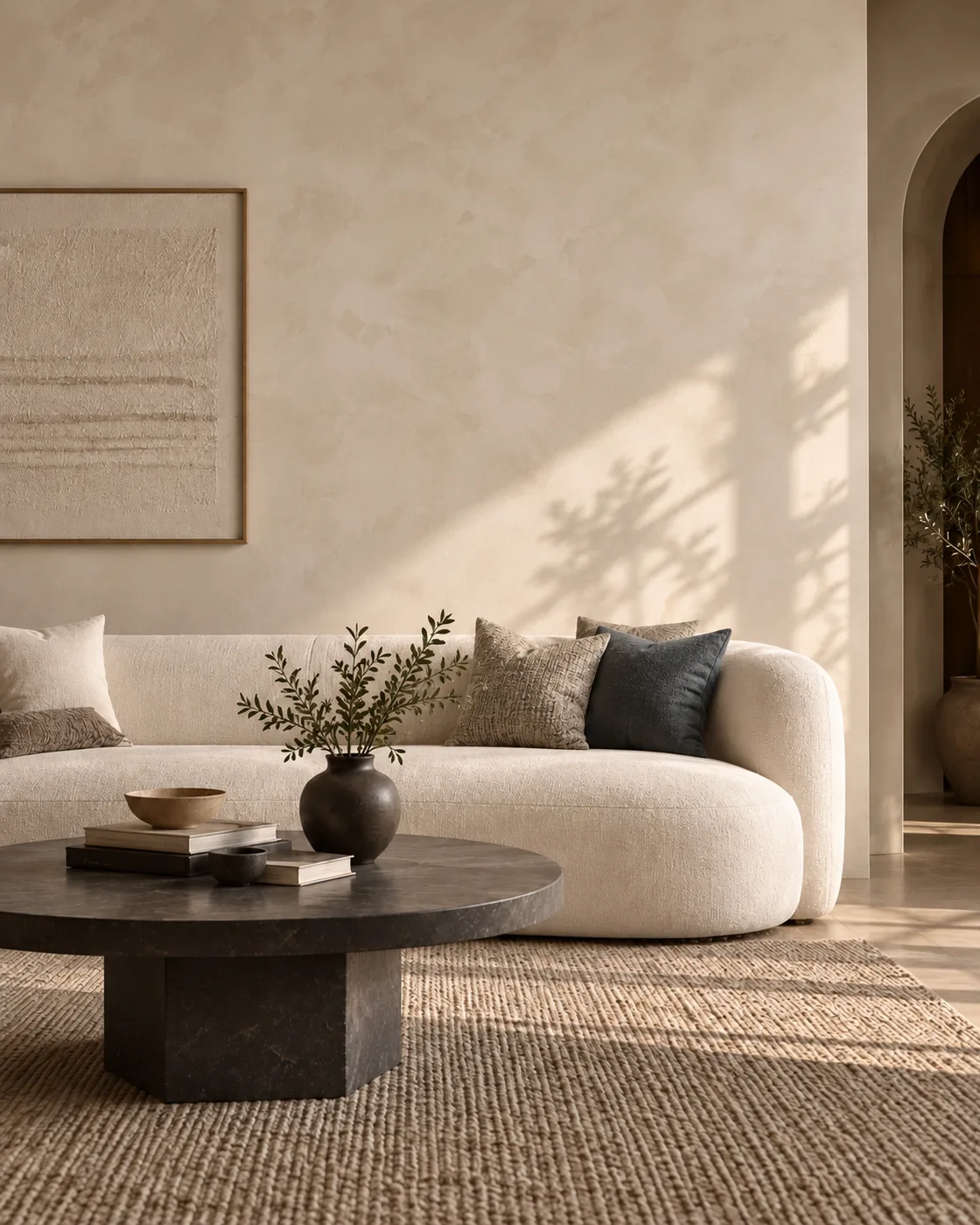
Limewash paint creates clouded, deeply matt colour through overlapping brushwork. It can bring movement to bedrooms, living rooms, studios, and broad wall areas without introducing a heavily built texture. Previously painted drywall may need a compatible mineral primer. Because the finish is translucent, isolated touch-ups can remain visible, and high-contact or wet areas need product-specific consideration.
Interior painting: controlled colour and practical renewal
Interior painting remains the practical choice when consistent colour, defined sheen, washability, and straightforward future recoating matter most. High-quality matt or low-sheen paint can look refined and can provide a calm background for more expressive stone, timber, or plaster elements. Preparation still matters: filling, sanding, caulking, priming, and crisp junctions determine whether the result feels architectural rather than merely decorative.
Exterior painting: protection shaped by exposure
Exterior painting must respond to the substrate, weather exposure, moisture movement, previous coatings, and seasonal application conditions. A finish selected for an interior wall should not be carried outside without an exterior-rated system. Masonry, wood, metal, and composite elements require different preparation and compatible products. Colour is only one part of an exterior specification; adhesion, breathability, detailing, and maintenance access are equally important.
Feature wall or whole-room finish?
A feature wall is useful when material depth should have a clear focal role, the budget is concentrated on one area, or the room already contains several strong surfaces. A whole-room approach can feel calmer when the finish is subtle and consistent, particularly with limewash or quiet paint colours. Continuous microcement may connect several planes, while a polished plaster can become overwhelming if every wall competes for attention. Decide which element should lead and allow the other surfaces to support it.
Coordinate colour with the wider material palette
Compare undertones rather than trying to match materials exactly. Warm mineral neutrals can connect oak, limestone, aged brass, and soft textiles; cooler greys may suit metal, concrete, or blue-toned stone. If the floor and millwork already carry pronounced movement, a quieter wall can restore balance. If the architecture is restrained, controlled variation in plaster or limewash may add the missing depth. Use the finish catalogues to shortlist directions, then verify them with physical samples.
Set realistic maintenance expectations
Ask how the surface should be dusted, wiped, washed, or resealed. Identify whether marks can be touched up locally or whether a full wall is likely to need refreshing. Consider who will maintain the room and which cleaning products are already used. A finish that requires gentle care may be entirely appropriate in a formal space and frustrating in a busy corridor. Maintenance is not separate from design; it determines how the intended character will age.
When should you request samples?
Request samples after narrowing the finish family but before confirming colour, movement, or sheen. The sample should use the proposed product, approximate technique, and relevant protective treatment. For highly variable work, ask for a larger board rather than a small chip. On-site mock-ups are valuable when lighting is complex, several substrates meet, or the approval group needs to see the finish in context. Record the accepted sample so it remains a practical reference during application.
Questions to ask before selecting a finish
Ask whether the product is suitable for the room and substrate, what preparation is included, how joints and cracks will be handled, how much natural variation to expect, and how the surface should be cleaned. Confirm drying and curing time, protection from other trades, edge and junction details, sample approval, and the likely visibility of future repairs. For bathrooms or exterior work, ask how waterproofing, drainage, ventilation, and weather exposure are addressed by the complete assembly.
Use professional consultation to connect design and specification
A professional consultation should connect the visual brief to construction reality. Provide photographs, drawings, room use, substrate information, lighting plans, schedule, and reference images. The applicator should explain suitable options and limitations without forcing a predetermined material. A project consultation can then lead to a focused sample programme and a written scope based on the actual surfaces.
The final choice should feel intentional in both appearance and use. When function, light, substrate, maintenance, and material character are considered together, an architectural wall finish becomes part of the room’s design rather than a decorative layer added at the end.
Frequently asked questions
What should I consider first when choosing a wall finish?
Begin with room function: moisture, traffic, cleaning, contact, heat, sunlight, and whether the wall is primarily practical or visual. These conditions narrow the suitable systems before colour and texture are selected.
Is a feature wall better than finishing the whole room?
Neither approach is automatically better. A feature wall concentrates material depth and creates hierarchy, while a subtle whole-room finish can feel calmer and more immersive. The room’s proportions, existing materials, and desired focal point should guide the decision.
When should I request a finish sample?
Request a representative sample after choosing the likely finish family but before confirming colour, sheen, and movement. Review it vertically in the intended room under changing natural and artificial light.
What information should I bring to a finish consultation?
Bring room photographs or drawings, substrate details, intended use, lighting information, project timing, maintenance expectations, and reference images. This helps connect the design direction to a realistic preparation and application system.