How to Clean and Maintain Venetian Plaster Walls
Venetian plaster needs very little care: dusting, gentle spot cleaning and occasional waxing. What to use, what to avoid and how to fix small marks.
Venetian plaster needs very little care. Dust it with a soft, dry cloth, wipe marks with a damp cloth and a little mild soap, and re-wax polished walls in busy areas every few years. Avoid acidic, abrasive or solvent-based cleaners.
Regular cleaning
Dust with a microfibre cloth or a soft brush attachment.
For fingerprints, use a cloth dampened with water and a drop of mild, pH-neutral soap.
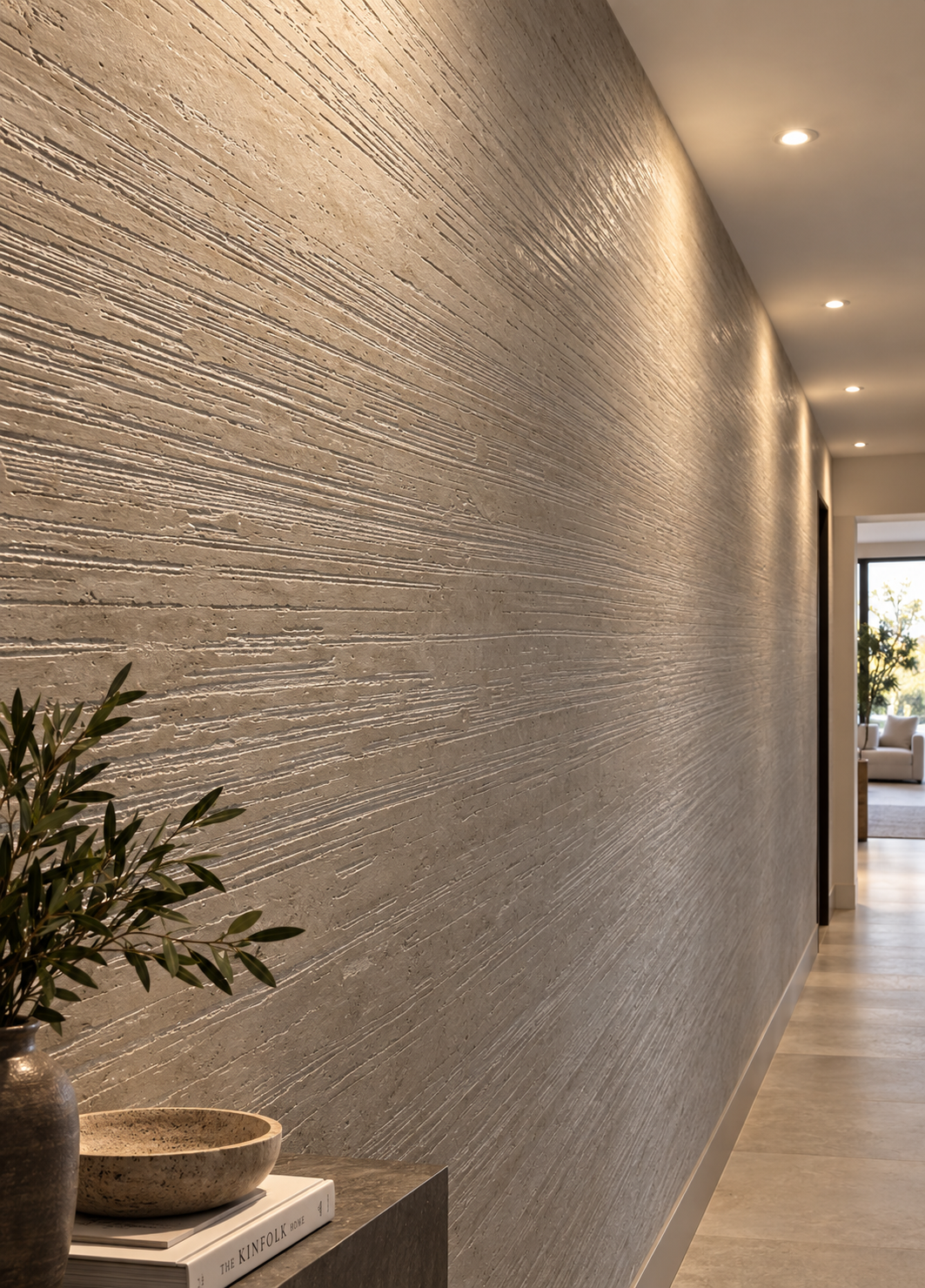
Wipe in the direction of the trowel marks and dry with a soft cloth.
What to avoid
Vinegar, lemon and other acidic cleaners, which etch lime
Bleach and strong degreasers
Scouring pads and magic erasers
Solvents, unless your applicator recommends them for a specific sealer
Waxing
Polished Venetian plaster is usually finished with wax or a traditional soap. In hallways, kitchens and around light switches, apply a thin new coat every few years and buff it with a soft cloth.
Fixing small marks
Scuffs: often buff out with a soft cloth and a little wax.
Small dents: filled with matching plaster and burnished.
Larger damage: repaired by the applicator with the original mix.
Matte Marmorino
Matte finishes are more porous. Clean them even more gently and blot instead of rubbing.
Next step
Have a wall that needs repair or a new finish? Request a free quote.
Frequently asked questions
How do you clean Venetian plaster?
Dust with a soft, dry cloth and wipe marks with a damp cloth and a drop of mild, pH-neutral soap.
What should you not use on Venetian plaster?
Acidic cleaners such as vinegar, bleach, strong degreasers, abrasive pads and most solvents.
How often should Venetian plaster be waxed?
Every few years in busy areas. Low-traffic walls need it rarely.
Can scratches in Venetian plaster be fixed?
Light scuffs often buff out with wax. Deeper marks are filled with matching plaster and burnished.