Can Venetian Plaster Be Used in Bathrooms and Showers?
Venetian plaster works on bathroom walls and in powder rooms, and some systems can be used in showers. Where it works, where it does not, and how it is protected.
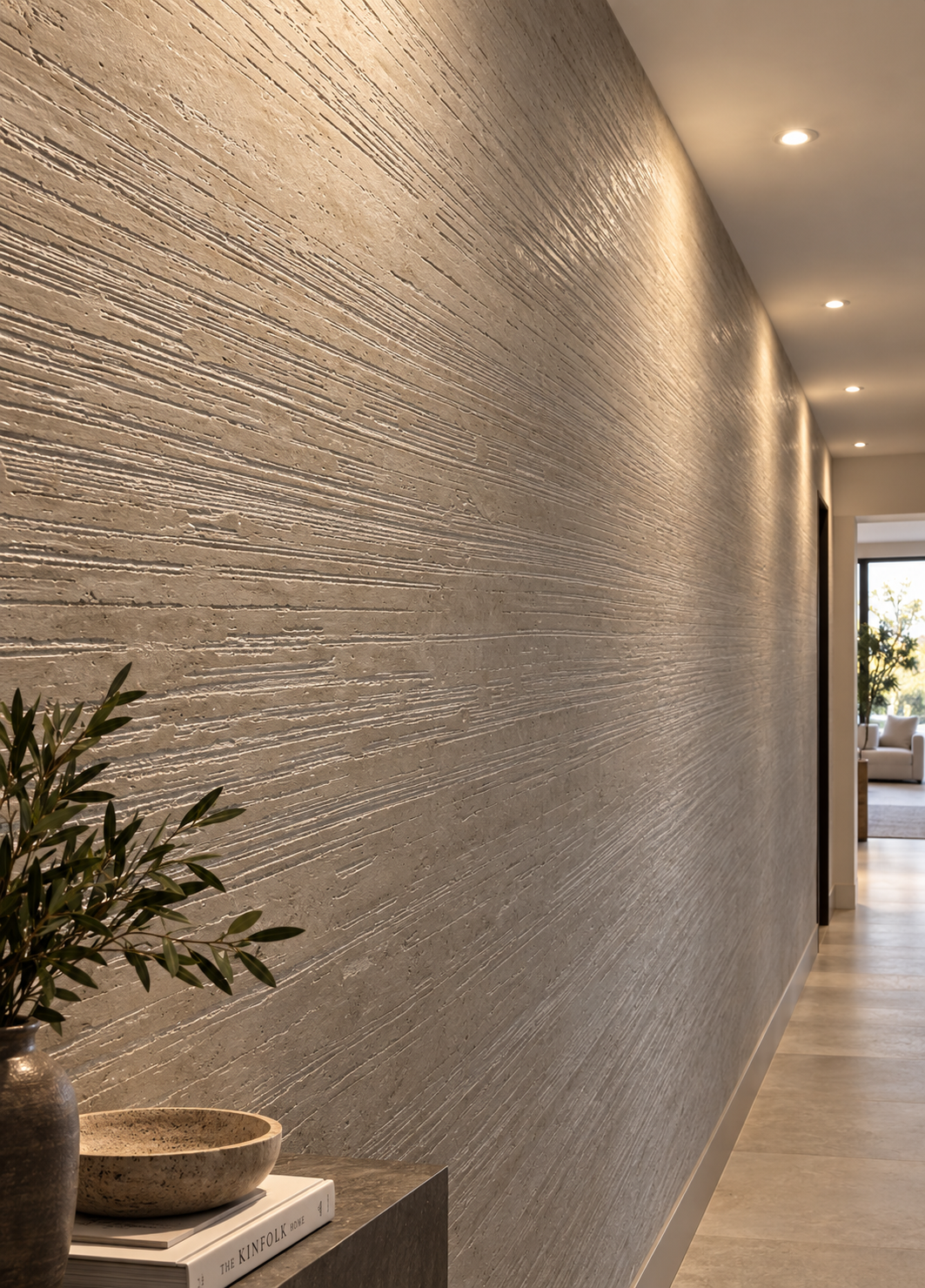
Venetian plaster works well on bathroom walls away from direct water, and it is a common choice for powder rooms. Inside a shower it is possible only with specific lime systems, such as tadelakt-style plasters or products designed for wet areas, plus a membrane and protective soap or sealer. For most showers, microcement is the more practical choice.
Why lime suits bathrooms
Venetian plaster is breathable and strongly alkaline. It absorbs and releases humidity, which helps with steam, and its alkalinity makes it hard for mould to grow. A waxed or soaped surface sheds splashes.
Where it works
Powder rooms: no shower, so almost any Venetian plaster or Marmorino finish works.
Bathroom walls outside the shower: fine with a protective wax or soap finish.
Behind the vanity: works with a sealer, though a tile or stone backsplash is often wise.
Ceilings: good in bathrooms with a working fan.
Where it needs care
Inside the shower: only with a wet-area lime system, a membrane behind it and regular maintenance.
Shower floors: not suitable. Use microcement or tile.
Bathrooms with poor ventilation: fix the fan first.
How it is protected
Polished Venetian plaster is finished with wax or a traditional soap that makes water bead. In splash zones this layer needs topping up more often.
Care
Wipe splashes, clean gently with a damp cloth and avoid harsh or acidic products. Re-wax every year or two in busy bathrooms.
Combining finishes
A practical combination is microcement for the shower and floor, with Venetian plaster or Marmorino on the remaining walls. Request a free quote to talk through your bathroom.
Frequently asked questions
Can Venetian plaster be used in a bathroom?
Yes, on walls away from direct water and in powder rooms, finished with wax or a protective soap.
Can Venetian plaster be used inside a shower?
Only with specific wet-area lime systems over a membrane, with regular maintenance. Microcement is usually more practical.
Does Venetian plaster get mouldy in bathrooms?
Lime is strongly alkaline, which resists mould. Good ventilation still matters.
How do you protect Venetian plaster in a bathroom?
With a wax or traditional soap finish that makes water bead, topped up more often near sinks and showers.